
An air conditioner is usually worth replacing when the compressor has failed on an old system, when it's burned out and contaminated the lines, or when the evaporator coil itself is leaking rather than a joint. On a newer system with warranty cover still live, repairing the failed part is often the better answer. Age narrows the choice. The repair quote against the replacement quote settles it.
The compressor is the expensive part.
So it's nearly always the compressor that forces the decision.
Is it worth replacing the compressor on an AC unit?
On a newer system with warranty cover, often yes. On an older one, usually not, because you're putting the most expensive part into a machine whose other parts are just as old and the quote starts to approach a new system. A burnout that contaminated the lines pushes it further that way, because the cleanup is most of the cost. Get both quotes before you decide.
Three questions decide it.
How old is the system? Fifteen years is a common working life for a central air conditioner, though how it was installed and looked after moves that a lot. A new compressor in an old condenser doesn't renew anything else in the box.
Is the compressor under warranty? Many come with a long parts warranty. If the part's free and only the labor is on you, the math changes completely. Check before you accept a replacement quote, because not every contractor brings it up.
Why did it fail? If it ran low on refrigerant, the leak has to be found first, or the new compressor goes into the same conditions that killed the old one. Ordinary wear is a different decision. Ask what they actually found.
What the refrigerant changes mean
If your system runs on R-410A, you can still get it repaired. The EPA says plainly that homeowners can keep maintaining and servicing existing systems, and that a faulty component can be replaced with a similar R-410A part. Nobody's forcing you to replace a working air conditioner.
New equipment is a different story.
Under the American Innovation and Manufacturing Act, the industry has been moving to substitutes such as R-454B and R-32. Both are A2L refrigerants, which are mildly flammable, and they go into equipment built for them. You can't put either one into a system that wasn't designed for it.
The dates have moved, and in your favor. In May 2026 the EPA finalized a rule that removes the January 1, 2026 installation deadline for this equipment, and lets pre-2025 inventory of air conditioning systems be installed until the supply runs out. So a system built before the rule changed can still go in.
Three practical points, then: a repair to an R-410A system is still perfectly legal, most new equipment you'll be quoted is built for the newer refrigerant, and some pre-2025 stock can still be installed. Ask which one you're being quoted.
Ask any contractor quoting you what refrigerant their proposed system uses, and what that means for servicing it in ten years.
Why the indoor unit has to match
The outdoor condenser and the indoor coil are rated as a pair, not separately. AHRI certifies the performance of the combination rather than the individual units. Put a new condenser on an old coil without checking the two are an approved match, and the efficiency and capacity printed on the quote aren't what you've bought. Sometimes the existing coil is a match. The point is that somebody checks.
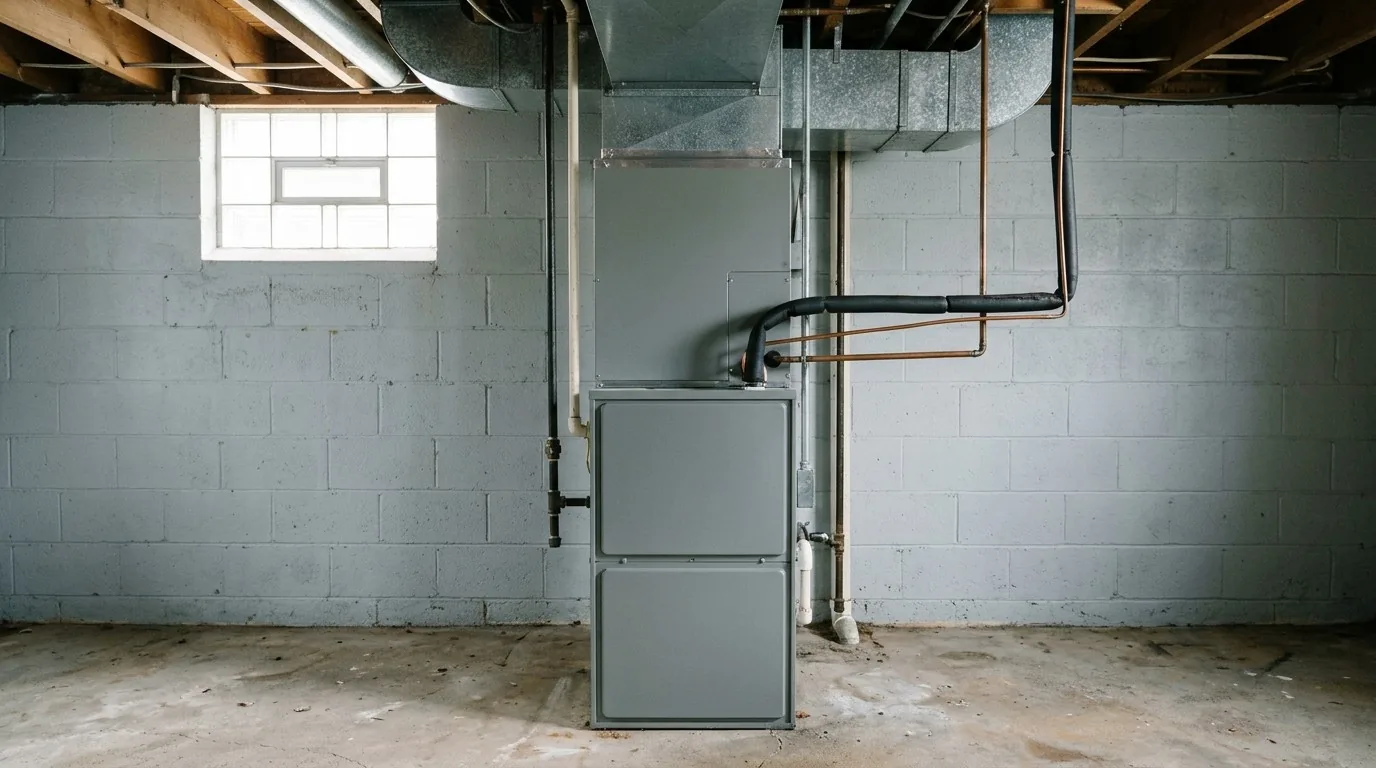
Ask for the AHRI reference number for the combination they're quoting. Every matched system in AHRI's directory has one, and it pulls up a performance certificate showing the indoor and outdoor units were rated together. It's the difference between being told it's a match and seeing that it is.
An unmatched coil undoes an otherwise good installation. So check for it before you sign anything.
A matched system means the condenser, the indoor coil and sometimes the blower are specified together. If you're replacing the furnace at the same time, it's simpler, because the coil sits on the furnace anyway and everything gets done at once.
If one quote is noticeably lower than the others, read it for what it leaves out. The usual gaps are:
- The indoor coil
- The line set
- A new thermostat
- The permit
- Disposal of the old unit
What the job involves
A straightforward changeout usually takes a day. The old refrigerant gets recovered instead of vented, which is federal law rather than good manners. The old equipment comes out, the new condenser goes in along with whatever indoor parts the match needs, and the line set is either cleaned and reused or replaced. Then the system is evacuated, charged to the manufacturer's figure and tested.
Evacuation is the step there's a temptation to rush. And it matters.
Pulling a deep vacuum removes moisture and air from the lines. Moisture left inside reacts with the oil and forms acid, and that's one of the ways a brand new compressor ends up failing early. Ask what micron level they pull to, and what the gauge read at the end. The number is the evidence, not the vocabulary.
The other sign of a careful job is charging to the manufacturer's figure. That starts from a weight and gets adjusted for the length of the line set and what the system is actually doing. Gauge pressure on its own doesn't tell anyone the charge is right.
The technician doing the refrigerant work must hold EPA Section 608 certification, which is federal, and putting gauges on counts on its own. The contractor needs a current Allen County license. Those are two different things, held by two different parties.
What moves the price
Four things decide where a quote lands: the size and efficiency of the equipment, whether the furnace is being replaced at the same time, whether the refrigerant line set is reused or replaced, and how easy the outdoor unit is to get at. Doing the furnace alongside it costs more today, and less in total than two separate jobs, as long as the furnace was near the end anyway.
Size and efficiency rating. A higher efficiency rating costs more up front and less to run. Bigger is not the same as better, though. An oversized system cools in short bursts and leaves the house clammy.
Whether the furnace is being done too. Doing both together costs more today and less than two separate jobs a few years apart, and the coil ends up matched to both. If the furnace has years left in it, that saving doesn't cover replacing a working furnace early.
The line set. Reusing the existing refrigerant lines is cheaper. Sometimes replacing them is necessary, especially after a compressor burnout.
Access. An outdoor unit in an open side yard is a quicker job than one wedged behind a deck.
Published national ranges for a full system replacement run well into the thousands, and the spread is wide. Treat them as a guide and get three quotes. What it costs to replace an air conditioner here goes through the numbers.
Questions people ask
How long does an air conditioner replacement take?
Usually one day for a changeout where the ductwork stays as it is. It takes longer if the line set is being replaced, if the indoor coil is awkward to reach, or if the furnace is being done at the same time.
The old refrigerant has to be recovered properly before anything comes apart, and that adds time at the start. Ask for a finish time when you book, not on the morning of.
How many hours does it take to replace an AC compressor?
Several hours for the compressor alone, assuming a clean failure and no contamination. The old refrigerant gets recovered, the compressor is swapped, the filter drier is replaced, and then the system is evacuated and recharged by weight.
After a burnout it takes a lot longer, because the lines have to be flushed and the coil may need replacing too. That extra work is why a burnout quote is so much higher than a simple compressor swap.
What should I ask before I hire someone?
Ask whether the quote includes a matched indoor coil, the permit, disposal of the old unit, and a new thermostat if you need one. Ask what refrigerant the system uses. Ask whether they'll charge by weight and pull a vacuum, and what micron level they pull to.
Ask for a current Allen County license number, and Section 608 certification for whoever touches the refrigerant. Ask for the AHRI reference number for what they're quoting. Easy answers are a good sign, not proof. Get the numbers in writing.
Do I need to be home for the installation?
Yes, at the start and the end. Someone needs to let the crew in and be there for the handover: the new thermostat, where the shutoffs are, and the commissioning results.
Ask for the refrigerant charge weight and the vacuum reading in writing. If the system gives you trouble in its first summer, those two numbers are the first thing a second opinion will ask for.
Should I replace the furnace at the same time?
It's worth considering if the furnace is also near the end of its life, because the labor overlaps and the indoor coil sits on the furnace anyway. Two separate jobs a few years apart cost more in total, and the house gets disrupted twice.
If the furnace is young and healthy, there's no reason to replace it early. In that case, replacing the furnace can wait until it needs doing.
Sources
- US Environmental Protection Agency, frequent questions on the phasedown of hydrofluorocarbons
- US Environmental Protection Agency, technology transitions regulatory actions, final rule May 2026
- Air-Conditioning, Heating and Refrigeration Institute, matched system ratings and reference numbers
- US Environmental Protection Agency, substitutes in residential and light commercial air conditioning and heat pumps
- US Environmental Protection Agency, Section 608 technician certification
- Allen County Building Department, Rules and Regulations, 19th edition
- National cost guides published by three home services directories, checked October 2026
Last updated