
An air conditioner that runs but won't cool is usually low on refrigerant, blocked for airflow, or has a failed capacitor stopping the compressor or fan from starting. The capacitor's the cheap one. Low refrigerant always means a leak, because refrigerant doesn't get used up the way fuel does.
This page covers what fails, what the repairs cost, and what the refrigerant rules mean if your system is more than a few years old.
Tell us about the job and we'll pass it to a local HVAC contractor serving your area.
Why is my AC not blowing cold air?
Four causes account for most of it: a dirty filter or blocked coil choking the airflow, a failed capacitor so the compressor won't start, low refrigerant from a leak, or a frozen evaporator coil. Check the filter and look at the outdoor unit first. If the fan outside isn't turning while the thermostat's calling for cooling, stop and get a technician out.
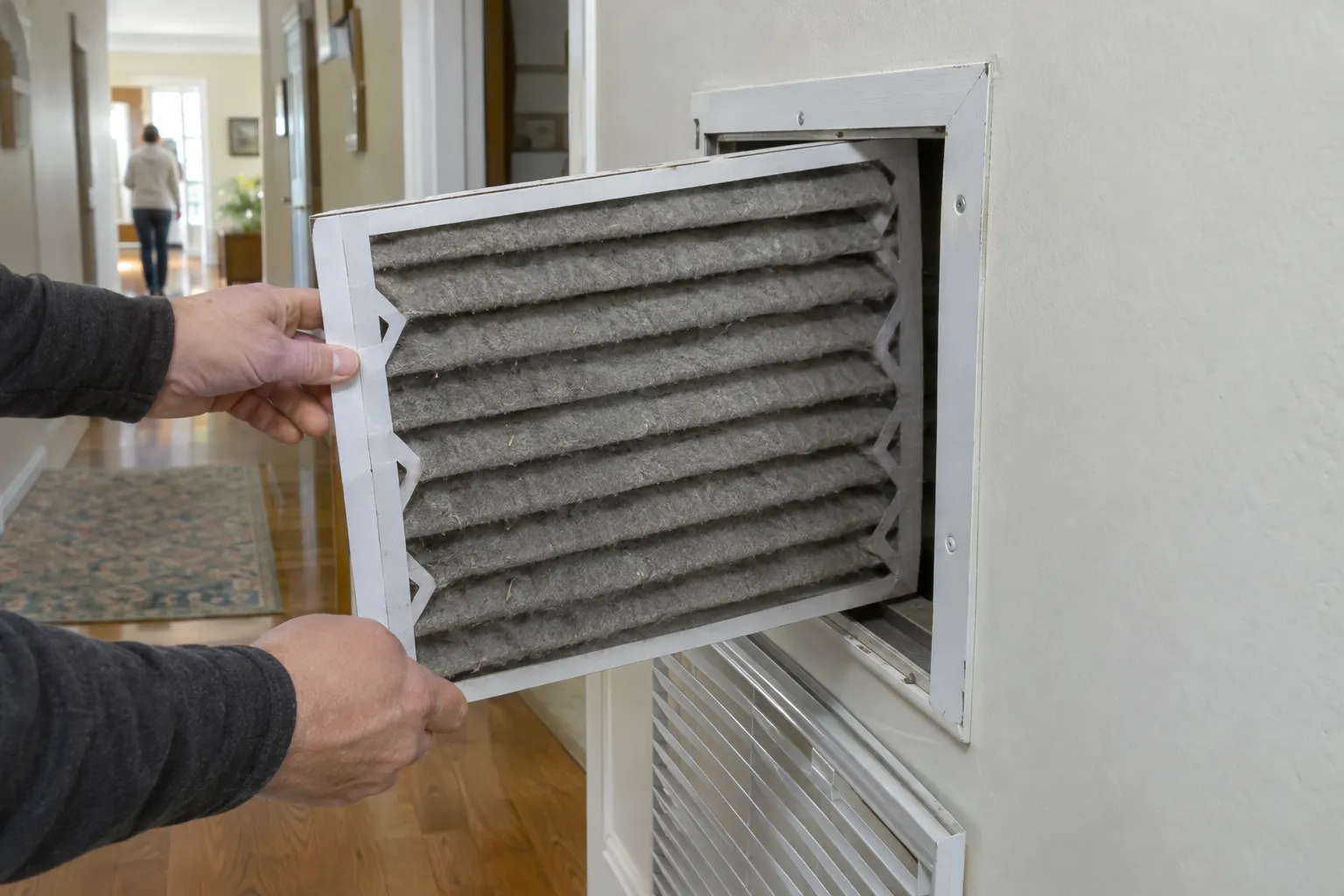
Work through it in this order.
The filter and the vents. Restricted airflow is the most common cause, and it's the only one you can fix yourself. Starve the system of air long enough and the evaporator coil freezes into a block of ice. Then it blows nothing at all.
The outdoor unit. It should be running and pushing warm air up. Silent? Or humming without the fan turning? A failed capacitor is one cause, and a fan motor or an electrical problem can look the same from outside. Switch the cooling off rather than leaving it trying. If the unit's buried in cottonwood fluff or grass clippings, clear it off.
Ice on the lines. A white, frosted line at the outdoor unit usually means the coil has frozen. Turn the cooling off and leave the fan running until the ice has gone, which takes longer than most people expect. Don't start the cooling again until it's clear, and get someone to find out why it froze. Running it frozen can damage the compressor.
Warm air from the vents, everything else normal. Often low refrigerant, and that means a leak somewhere. But the compressor, the thermostat and the outdoor unit can all produce the same symptom, so it wants testing rather than guessing.
What is the compressor in the AC?
The compressor is the pump in the outdoor unit that moves refrigerant around the system and raises its pressure. It's the heart of the machine, and it's the single most expensive part in it. Everything else in an air conditioner is there to support what the compressor does.
So when a compressor fails, the repair-or-replace conversation usually starts right away.
You're weighing a big part and several hours of labor against the age of the whole system. If the unit's still under warranty, the part may be covered while the labor isn't, so check that before you agree to anything. On an older unit, a failed compressor often tips the decision toward replacing the system, especially once the warranty's gone. Put the repair quote next to the price of a new system before you decide.
Ask why it failed. A compressor that died because the system ran low on refrigerant for two summers will do the same thing again if nobody finds the leak.
What is AC compressor black death?
It's the trade's name for what happens when a compressor burns out inside and contaminates the whole system with acid and burnt oil. That debris travels through the refrigerant lines and the coil. Put a new compressor in without cleaning all of it out, and the new one dies too.
Dramatic name. Very specific, mechanical problem.
Fixing it properly means flushing the lines, replacing the filter drier, and sometimes replacing the coil as well. That's why a quote for a burnout is so much higher than one for a compressor that just wore out. A contractor who offers to drop in a new compressor cheaply after a burnout is setting you up for a second failure.
A bad burnout often tips the decision toward replacing rather than repairing. How far the contamination spread, the age of the system and the cost of cleaning it all out are what decide it.
What the refrigerant rules mean for an older system
If your system uses R-410A, you can still get it repaired. The EPA is clear that homeowners can keep maintaining and servicing existing systems, and that a faulty component can be replaced with a similar R-410A part. You don't have to replace a working air conditioner because the rules changed.
What's changed is what goes into new equipment.
Under the American Innovation and Manufacturing Act, the industry has been moving off R-410A and onto substitutes such as R-454B and R-32. Both are A2L refrigerants, which are mildly flammable, and the EPA lists both for new equipment only. You can't put a new refrigerant into an old system, and nobody reputable will try.
There's an exception worth knowing about, and it may explain a quote you're looking at.
The compliance date for new residential systems was January 1, 2025. But the EPA sets no installation compliance date for systems where all the components were manufactured or imported before then. So equipment built before the rule changed can still be installed.
The EPA says its own tables are for information only, so check the current position there rather than on any website, this one included.
What it means in practice, if you're deciding whether to repair or replace an older system:
- Repairs are still fine. A repair to an R-410A system is still legal and still normal
- Ask about refrigerant. Supply and price for older systems are worth asking about directly when you get a quote
- Replacing anyway? You'll be putting in a system built for the newer refrigerant
EPA Section 608 certification is federal, and it covers anyone servicing equipment that could release refrigerant. The bar is lower than people expect. Attaching gauges to check pressure counts on its own, and so does adding or removing refrigerant, so almost any diagnosis of a cooling problem needs it. A purely electrical repair might not, and a gas furnace repair doesn't.
What air conditioning repair costs
A capacitor is the cheap repair, usually in the low hundreds. Refrigerant leaks vary enormously depending on where the leak is and how much gas the system needs. A compressor is the expensive one, often running into four figures with labor, which is why the age of the system matters so much in the decision.
Published national ranges put a capacitor at roughly $150 to $400, and a compressor replacement well into the thousands once labor's counted.
Treat those as a guide. They come from national directories, not Fort Wayne. A real quote is the thing that tells you what your own system costs.
Three things move the price here: whether the problem's in the indoor or the outdoor unit, how much refrigerant your system takes, and whether someone has to go up into the attic in August. What it costs to replace an air conditioner here goes through the numbers if a repair turns into a replacement.
Questions people ask
What is the 3 minute rule for AC?
It's the advice to wait at least three minutes before restarting an air conditioner after you switch it off, and five is safer. The compressor needs the pressures in the system to even out before it starts again.
Starting against high head pressure puts heavy strain on the motor, and over time it's a way to kill a compressor early. Most modern thermostats build in a delay for exactly this reason, which is why your system sometimes does nothing for a few minutes after you change the setting.
What is the average lifespan of an AC unit?
It's commonly quoted at 12 to 15 years in a climate like Indiana's, where the system gets a hard summer and then sits unused for months. Maintenance, the right refrigerant charge and airflow all move that number. A system that spent two summers running low on refrigerant won't make it to the top of that range.
Fort Wayne's cooling season is shorter than down south, so the system runs fewer hours a year. Age alone still doesn't tell you whether it needs replacing.
What does it cost to service an aircon?
A seasonal service is a flat price. It covers cleaning the coils, checking the refrigerant charge, testing the capacitor and electrical connections, and clearing the condensate drain. It's cheaper than a repair visit, and it's the visit that catches a slow refrigerant leak before it turns into a dead compressor.
Book it in spring, before the first hot week puts every system in the city under load at once.
What do you call someone who fixes AC units?
An HVAC technician, or an air conditioning technician. HVAC stands for heating, ventilation and air conditioning, and most people in the trade here work on all of it. That's why the same company fixes your furnace in January and your air conditioner in July.
In Fort Wayne, the contractor needs a current Allen County license, and anyone touching refrigerant needs federal EPA Section 608 certification on top of that.
What is the $5000 rule for HVAC?
Multiply the age of the unit in years by the cost of the quoted repair. Over 5,000 suggests replacing, under suggests repairing. A $600 capacitor and fan motor job on a 6 year old system gives you 3,600, so repair it. The same money on a 14 year old system gives you 8,400, so look at replacing it.
It's a rule of thumb. It ignores warranty, efficiency and whether you're staying in the house, so use it to sanity-check a quote, not to decide.
Does a refrigerant leak have to be found, or can it just be topped up?
It has to be found, and that's practical rather than legal. Refrigerant isn't used up in normal running, so a system that's low has a leak. Top it up without fixing it and you'll pay for the same gas next summer.
The EPA's leak repair rules, which started in January 2026, cover appliances holding 15 pounds or more and exclude residential air conditioning. Nobody's forcing you. It's still the right call, because running low kills compressors early.
A proper repair finds the leak, fixes it, then recharges to weight.
Guides in this section
 Costs
What it costs to replace an air conditioner in Fort Wayne: what the published guides say, what moves your quote, and why Indiana's…
Sources
- US Environmental Protection Agency, Section 608 technician certification
- US Environmental Protection Agency, technology transitions regulatory actions, final rule May 2026
- US Environmental Protection Agency, frequent questions on the phasedown of hydrofluorocarbons
- US Environmental Protection Agency, technology transitions HFC restrictions by sector
- US Environmental Protection Agency, substitutes in residential and light commercial air conditioning and heat pumps
- Allen County Building Department, Contractor Licensing
- National cost guides published by three home services directories, checked October 2026
Last updated