A furnace that won't start, one that blows cold air and one that keeps shutting off are three different problems. What it's doing narrows things down, though it won't tell you which part has failed. A few things are worth checking before you call anyone: the thermostat, the power, and the filter. If none of those is it, a technician has to test the system to find the cause. For the wider picture, furnace repair in Fort Wayne covers what the work costs and what the rules are here.
If you smell gas, or a carbon monoxide alarm is sounding, stop reading. Get everyone out of the house and call 911 from outside. Don't go back in until emergency responders or the gas utility say it's safe.
No heat right now and it's cold? Emergency furnace repair deals with that situation rather than this one.
What are common furnace problems?
Thermostat settings, power interruptions, restricted airflow and ignition trouble account for a lot of them. Some are simple: flat thermostat batteries, a switch somebody turned off, a filter that's overdue. Others involve the electrical controls, the blower motor, or the parts that light the gas and confirm it lit. A furnace may also shut itself down because a safety control found something wrong.
What the symptom won't do is tell you which part failed. That takes testing.
The furnace won't turn on at all
Completely silent, no fan and no clicking. Start by checking whether it's getting power and whether the thermostat is actually calling for heat, because those are free to rule out. A tripped breaker, a switch turned off or a thermostat problem would all explain it. So would a fault inside the furnace, which is why these checks rule things out rather than diagnose.
- The thermostat. Set to heat, and set above the current room temperature. If it takes batteries, check them.
- The switch. Most furnaces have an ordinary light switch on or beside them. It looks like it belongs to the room and it gets flipped by accident.
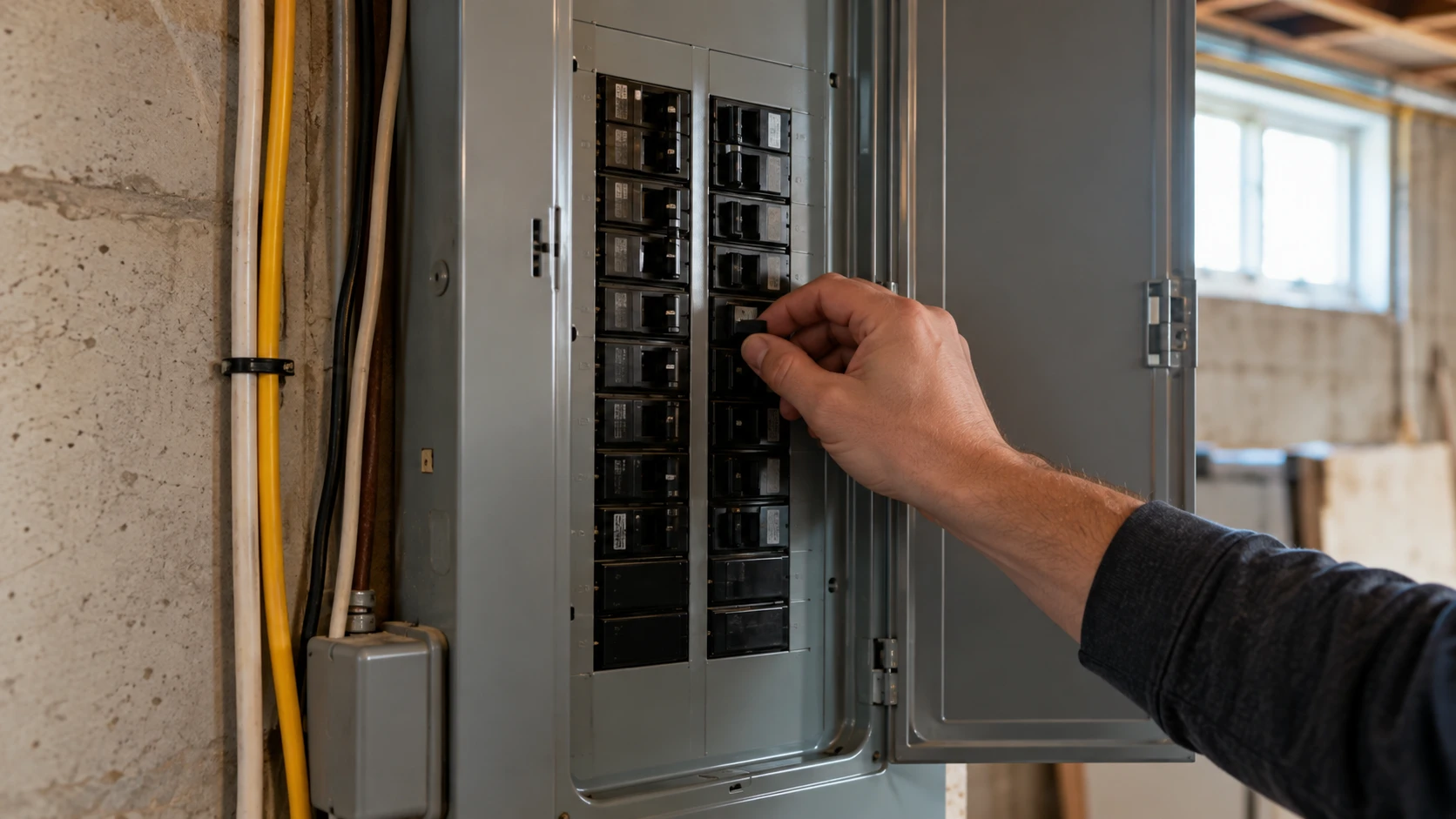
- The breaker. If it's tripped, reset it once. Don't reset it if you can see or smell burning, or see damage at the panel.
- The front panel. Many furnaces won't run with the panel off or badly seated.
A breaker that trips again is reporting a fault. Leave it off and call someone.
It runs but blows cold air
The blower is going and the air is cold or barely warm. Check the thermostat's fan setting first: on "on" the fan runs continuously, including between heating cycles, so you'll feel room-temperature air for long stretches and nothing is wrong. On "auto" it only runs when there's heat to move.
If the fan setting is right, it could be the ignition, a safety control, or something else inside the furnace. Telling those apart takes testing rather than looking.
One thing not to do: don't keep switching it off and on to force another cycle. If it repeatedly fails to light or stops soon after starting, leave it off and call a technician. It may be stopping because a safety control has found a problem.
Rather talk it through? Call (260) 305-9335 and say what it does when it tries to start.
It starts, runs a few minutes, then stops
When a furnace starts and stops repeatedly without getting the house warm, it's usually called short cycling. A clogged filter can cause it by restricting airflow and letting the furnace overheat, so the filter is a sensible place to start. It isn't proof of what's wrong.
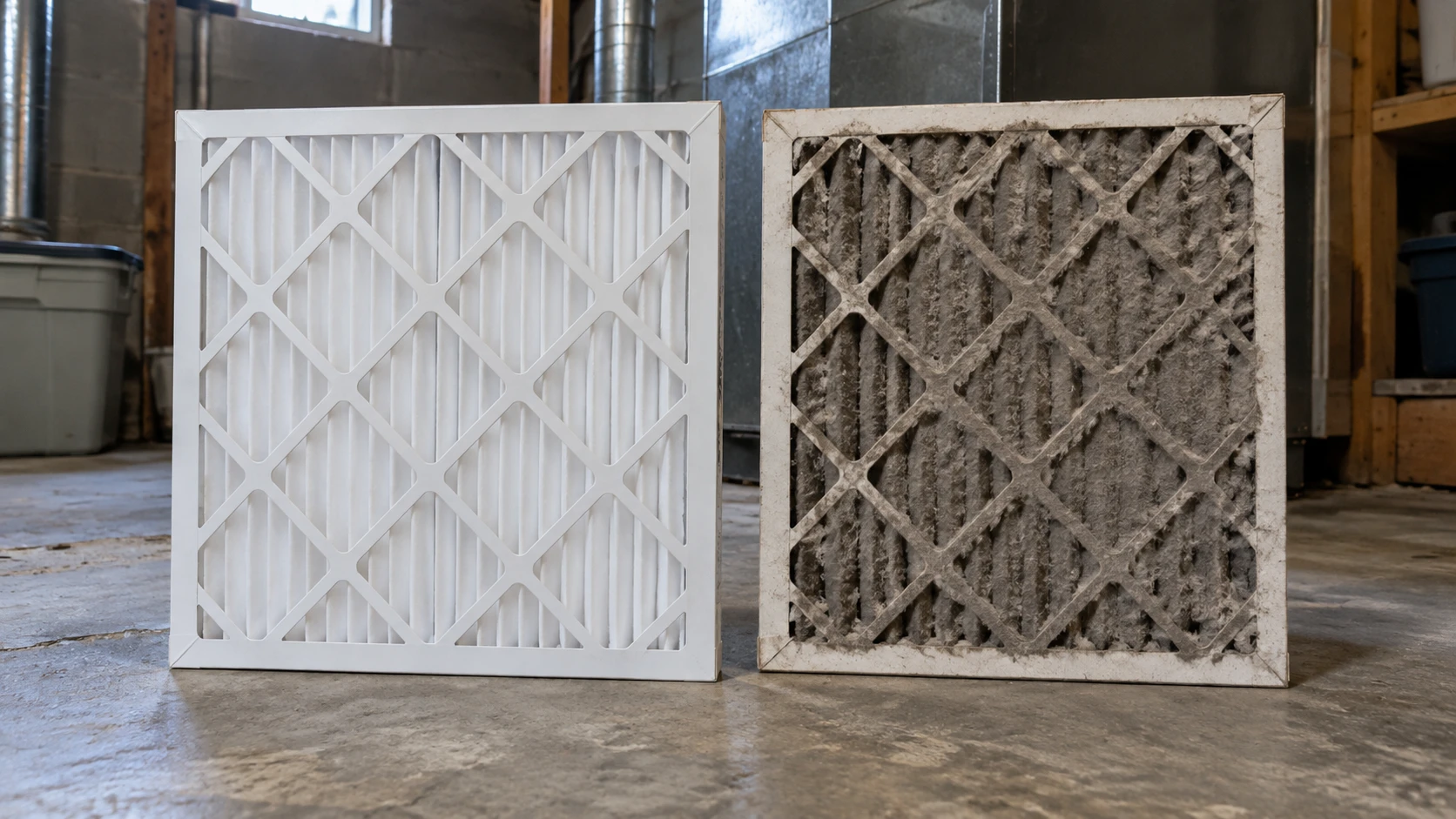
Check the filter if you can get at it easily. Visibly clogged with dust means replace it, following the maker's instructions. Some high-efficiency filters are too dense for a light test to tell you much, so go by the replacement schedule as well.
If a fresh filter doesn't help, stop and arrange an inspection. Thermostat problems, faulty controls, a blower fault and equipment that was never the right size for the house can all produce the same pattern, and a technician can also check for conditions that make the furnace unsafe to run.
What you can safely check yourself
There are a few things worth checking before you call, and a clear point past which it isn't a homeowner job. You can check the thermostat settings, an accessible filter, the furnace's power switch and the breaker panel. Don't open the furnace cabinet, and don't attempt gas, combustion or electrical repairs. If you smell gas, see smoke or suspect an electrical fault, stop and get help.
These ignition and burner points apply to gas furnaces. An electric furnace has no burners or flame sensor, though thermostat, power and airflow problems affect both. If your heat comes from a heat pump, the outdoor unit is part of the picture and that's a different job again.
Beyond the checks, the most useful thing you can do is write down what actually happens when it tries to start. Does it click, hum, or shut off after a few seconds? If your furnace shows a diagnostic code through a window on the cabinet, note it. Don't remove a panel to find one.
The work behind that panel belongs with a technician. Allen County requires the business to be registered with its Building Department and to employ a supervisor who holds a county license, and heating permits only go to registered contractors. Worth asking before anyone starts.
What are the signs a furnace is going bad?
Rising heating bills, unusual noises, trouble holding the temperature and repeated repairs are the ones people notice. None of them settles the repair-or-replace question on its own, and plenty of them are fixable. On an older furnace, several together are a reason to get it looked at and start asking about replacement before it fails rather than after.
Some things shouldn't wait. A loud bang when the burners light needs prompt attention. Grinding or scraping suggests a mechanical problem and running it that way can make the repair bigger.
Heard one of those? Call (260) 305-9335 and describe the noise.
Soot or black deposits around a gas furnace or its vents can point to a combustion or venting problem. Switch it off and have it inspected before running it again. If a carbon monoxide alarm sounds, get everyone out and call 911 from outside.
What furnace repair and replacement cost here covers the numbers if it turns into a replacement.
Questions people ask
How do I reset a furnace?
It depends on the model, so check the manual first. On many furnaces, switching the power off at the furnace switch and back on again will restart it.
If there's an error code visible without opening the cabinet, write it down before restarting, since a reset can clear it. Don't keep resetting a furnace that won't start or that shuts down again, and if you smell gas, leave it off and get help.
My thermostat is calling for heat and nothing happens. What now?
Check the thermostat is set to heat and above room temperature, and check its batteries if it has them. Then check the furnace switch, the breaker, and that the front panel is properly seated.
If those checks don't turn it up, the furnace may have an electrical, ignition or safety control problem. A technician can test it and find the cause.
What fails first on a furnace?
There's no single part that always goes first. Ignitors, flame sensors, blower motors and electrical controls can all cause trouble, depending on the furnace and how it's been looked after.
Some repairs involve small parts, others are a great deal more involved. A technician has to identify the failed part before anyone can judge the cost or whether replacing makes more sense.
Is a furnace that short cycles dangerous?
It can be. Sometimes it's the furnace overheating and a safety control shutting it down, but there are other causes. Repeated overheating is hard on equipment and shouldn't be ignored.
If it keeps stopping before the house is warm, arrange an inspection rather than restarting it over and over. If you smell gas or a carbon monoxide alarm sounds, leave the house and call 911.
Sources
- US Consumer Product Safety Commission, carbon monoxide information center
- Centers for Disease Control and Prevention, about carbon monoxide poisoning
- Allen County Building Department, Contractor Licensing
- Allen County Building Department, Rules and Regulations, section F.1 (HVAC contractor registration and supervisor licensing)
- Carrier, furnace troubleshooting guide
- Trane, gas furnace diagnostic lights
Last updated