
If you're replacing a gas furnace in Fort Wayne, it's worth getting a heat pump quoted alongside it. A gas furnace burns fuel to make heat. A heat pump uses electricity to move heat from the outside air into the house, and in summer it runs in reverse and cools instead. Which one suits you depends on what you're replacing, how well the house holds heat, and whether the air conditioner is near the end too. About seven in ten Allen County homes heat with natural gas, so this is a decision a lot of people here face.
Is it better to have a furnace or a heat pump?
Neither is the right choice for every home. A gas furnace holds its rated heat output even when it's bitterly cold outside. A heat pump moves heat rather than making it, so it delivers more heat than the electricity it consumes, and it replaces your air conditioner at the same time. The real question isn't which is better. It's whether the heat pump you're quoted can heat your house on the coldest nights, and what happens when it can't.
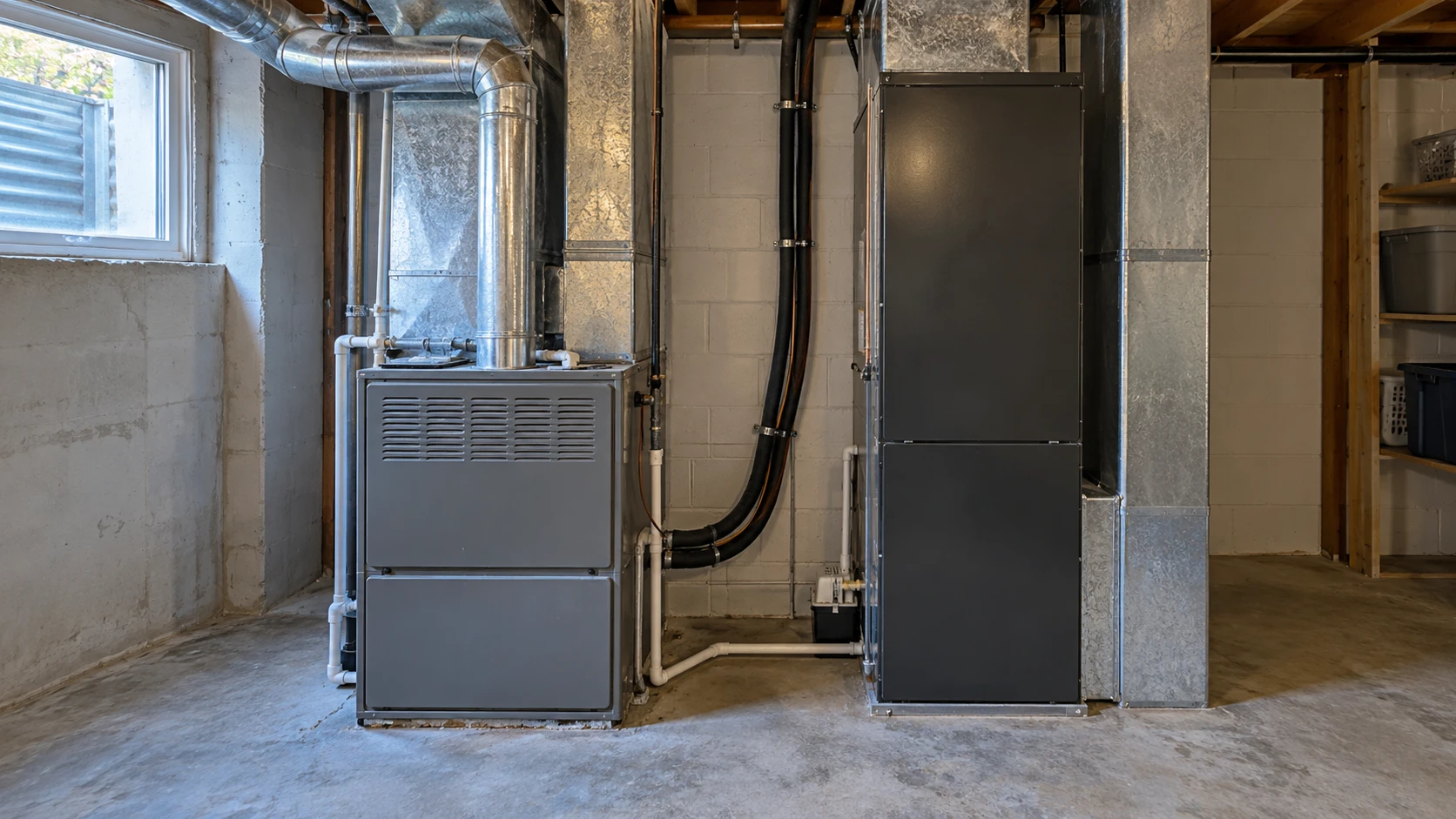
A heat pump does two jobs with one machine, which matters most when the furnace and the air conditioner are both near the end. Replacing those separately is two installations. What a furnace replacement involves covers that side of the decision.
There's a third option worth asking about. A dual-fuel system pairs a heat pump with a gas furnace, usually sharing the same ductwork. The controls decide when the furnace takes over, most often from an outdoor temperature setting. That setting is what determines how much of your heat comes from electricity and how much from gas, so ask how yours would be set and why.
What is the downside of having a heat pump?
Three things worth knowing before you sign. It can cost more to install than replacing a furnace alone, though that depends on what's being replaced. In cold weather many systems lean on backup heat, and what that backup is makes a real difference to running cost. And the air from the vents is usually cooler than furnace air, which can feel wrong even when the house is heating properly.
Backup heat is the one to ask about specifically.
On an all-electric system it's normally electric resistance elements, which work like a toaster and cost considerably more per unit of heat than the heat pump itself. On a dual-fuel setup the backup is the gas furnace. Same situation, very different bill.
Rather talk it through? Call (260) 305-9335 and say what you're replacing and roughly how old it is.
Will a heat pump heat a house through an Indiana winter?
There's a cold weather rating worth knowing by name, and its test temperature is unusually relevant here. ENERGY STAR's Cold Climate designation is tested at 5 degrees Fahrenheit. To earn it, a heat pump has to still deliver at least 70 percent of the heating capacity it has at 47 degrees, while producing at least 1.75 times more heat energy than the electricity it draws.
That 5 degree test matters more in Fort Wayne than it might elsewhere. ENERGY STAR's own county guide lists 4 degrees as Allen County's 99 percent winter heating design temperature, taken from Fort Wayne International Airport. That makes the cold climate rating a sensible place to start when you're comparing models.
It doesn't replace working out how much heat your own house needs.
That tells you the equipment was tested in the cold. It does not tell you it will heat your house.
Those are different questions. Whether a particular heat pump carries a particular Fort Wayne home through a cold snap depends on how much heat that house loses and the unit's capacity at the temperature it has to work in. A contractor establishes that with a heat loss calculation. If one isn't offered, ask for it.
One more thing about that 4 degree figure: it isn't the coldest Fort Wayne gets. It's a statistical benchmark, and temperatures are expected to fall below it for roughly one percent of the hours in a typical year. Backup heat covers those hours. It also comes on during defrost cycles, and when a thermostat is turned up after being set back.
Why is my bill so high with a heat pump?
Start with the one that catches people off guard. If you switched from a gas furnace, your heating cost has moved from the gas bill to the electric bill. The electric bill going up doesn't mean heating got more expensive. Compare the two together before drawing a conclusion.
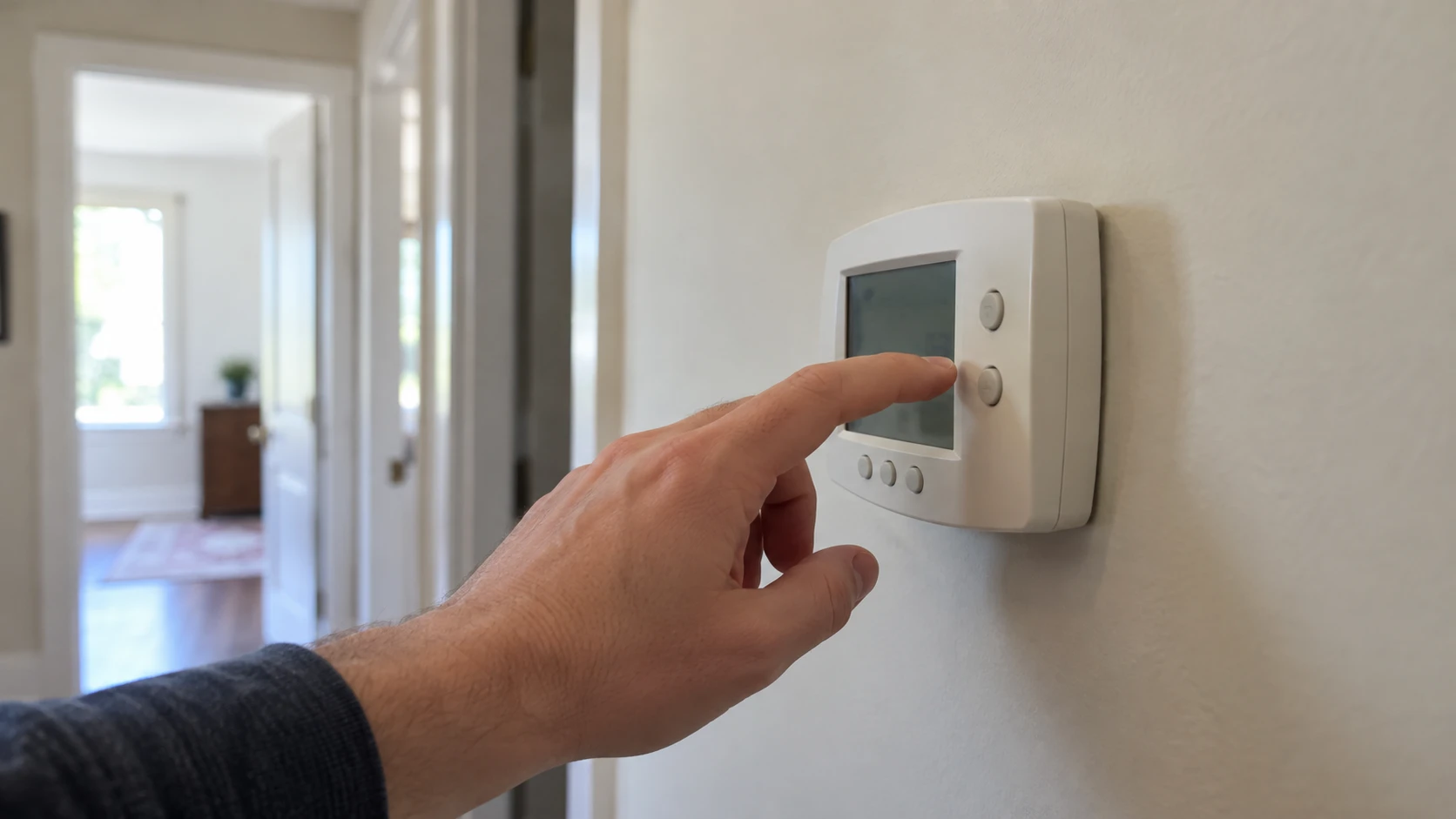
Beyond that, the possibilities are electric backup heat running more than it needs to, thermostat settings that bring the backup in unnecessarily, a house that loses heat quickly, or equipment that isn't performing as it should.
Electric resistance backup is the expensive one. A system leaning on it often will show up on a bill long before anyone notices the equipment is struggling.
Two questions for a contractor: at what outdoor temperature does this system start using backup heat, and what is the backup?
How much does a heat pump cost for a 2000 sq ft home?
There's no honest answer by square footage, and that's worth knowing before you ring round for prices. Floor area doesn't tell anyone how much heat a house loses. Insulation, windows, air leakage, ceiling height and how the ductwork runs all change the answer, and two 2,000 square foot houses on the same street can need different equipment.
What moves the price: the capacity the house actually needs, whether the model carries the cold climate rating, whether the ducts can move enough air or need work, and whether you're adding backup heat or keeping an existing furnace as part of a dual-fuel setup.
Get it quoted off a heat loss calculation rather than a rule of thumb. A number produced from square footage alone is a guess wearing a price tag.
Why does my house feel cold with a heat pump?
The air is cooler than you're used to. A gas furnace delivers short bursts of air that feel hot. A heat pump usually runs longer and delivers gentler heat, so standing at a vent it can feel like it's blowing cold while the room is still warming up.
The thermostat is what to judge it by, not the vent. If the house reaches the temperature you set and holds it, the system is doing its job.
If it isn't reaching temperature, that's a different problem and worth having looked at.
What to ask before you decide
Get a furnace and a heat pump quoted side by side, from the same contractor, for the same house. Two quotes from two companies tell you more about the companies than about the equipment. One visit, one set of assumptions about your house, two prices. Then work through these six questions before you sign anything.
- What's the heat loss calculation for this house? Not a rule of thumb from the square footage.
- Does this model carry the ENERGY STAR Cold Climate designation?
- At what outdoor temperature does it switch to backup heat?
- What is the backup, and what does it cost to run?
- Will my existing ducts move enough air for this? Ducts sized for a furnace aren't automatically right for a heat pump.
- What would a dual-fuel system cost instead?
Ask for the answers in writing. A contractor who can explain all six in plain terms is the one to take seriously.
Questions people ask
Is it okay for a heat pump to run all night in winter?
Yes. A heat pump is built to run long and steady rather than in short bursts like a furnace, and on a cold night that can mean it barely stops.
Long runs on their own aren't a fault. What would be is the house getting colder while it runs, or backup heat staying on constantly.
Why are homeowners switching from gas furnaces to heat pumps?
One machine covers heating and cooling, which matters when an older furnace and air conditioner are both due. Moving heat also takes less energy than making it.
Whether that lands as a lower bill depends on what you pay for gas against electricity, the equipment, and the house itself.
Can a heat pump use the ducts I already have?
Sometimes, and it needs checking rather than assuming. A heat pump generally moves more air than a furnace to deliver the same heat, so ducts that suited a furnace can be undersized.
Duct size, condition and airflow all matter. Ask for any duct work to be itemized in the quote so you can compare the real installed cost.
What is a dual-fuel system?
An electric heat pump and a gas furnace in the same house, usually sharing the ductwork. The heat pump handles milder weather and summer cooling, and the furnace takes over when the controls call for it.
What it costs depends on whether you're replacing both or adding a heat pump to a furnace you're keeping. What furnace repair and replacement costs here covers the furnace side.
Sources
Last updated