
Most comparisons tell you a heat pump is cheaper to run because it moves heat instead of making it. The physics is right and it does not settle the bill, because the bill depends on what your utility charges for gas against electricity. Worked through at Indiana's published average prices, the gas furnace comes out cheaper per unit of heat. That is one calculation at one set of prices rather than a forecast of your winter, so here it is with the figures it uses and the method to redo it on your own bill. Furnace or heat pump in Fort Wayne covers the rest of the decision.
What does it cost to run each one in Fort Wayne?
At Indiana's published average prices, a 95 percent gas furnace delivers a million Btu of heat for about $11.66. A heat pump holding a coefficient of performance of 3 delivers the same heat for about $16.63. Those are costs per unit of heat at stated efficiencies, not a prediction of either bill across a winter, which also turns on the weather and how the equipment actually performs.
Two numbers do the work, both from the US Energy Information Administration. Indiana households paid an average of $11.49 per thousand cubic feet of natural gas across 2025, and 17.02 cents per kilowatt hour for electricity in August 2026. Those cover different periods, and both are statewide averages that include fixed charges rather than the rate on your own bill.
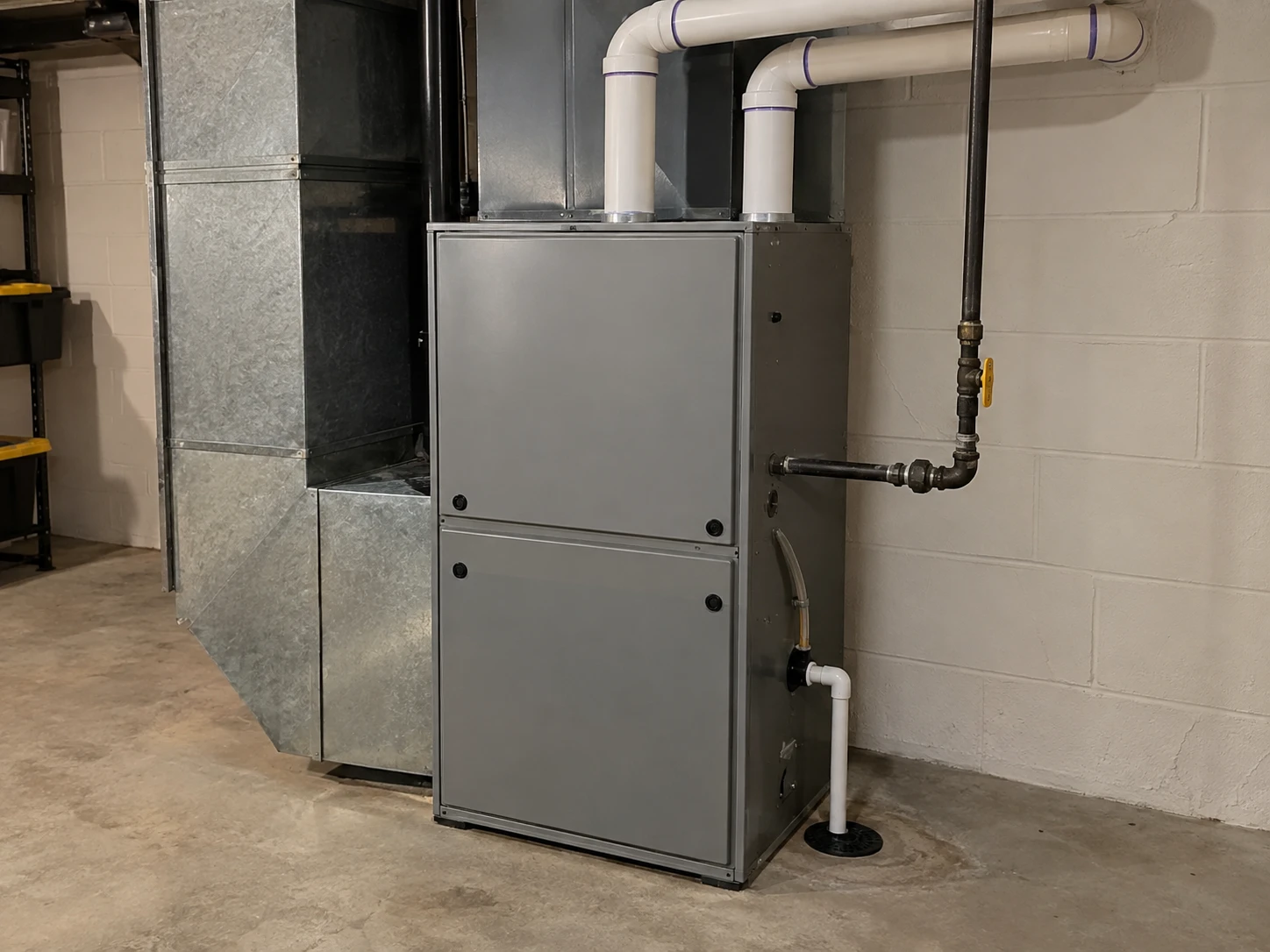
A thousand cubic feet of gas holds about 1.037 million Btu, so the gas itself costs about $11.08 per million Btu. A furnace does not deliver all of that. A 95 percent unit puts about $11.66 of gas into the house per million Btu of heat, an 80 percent one about $13.85.
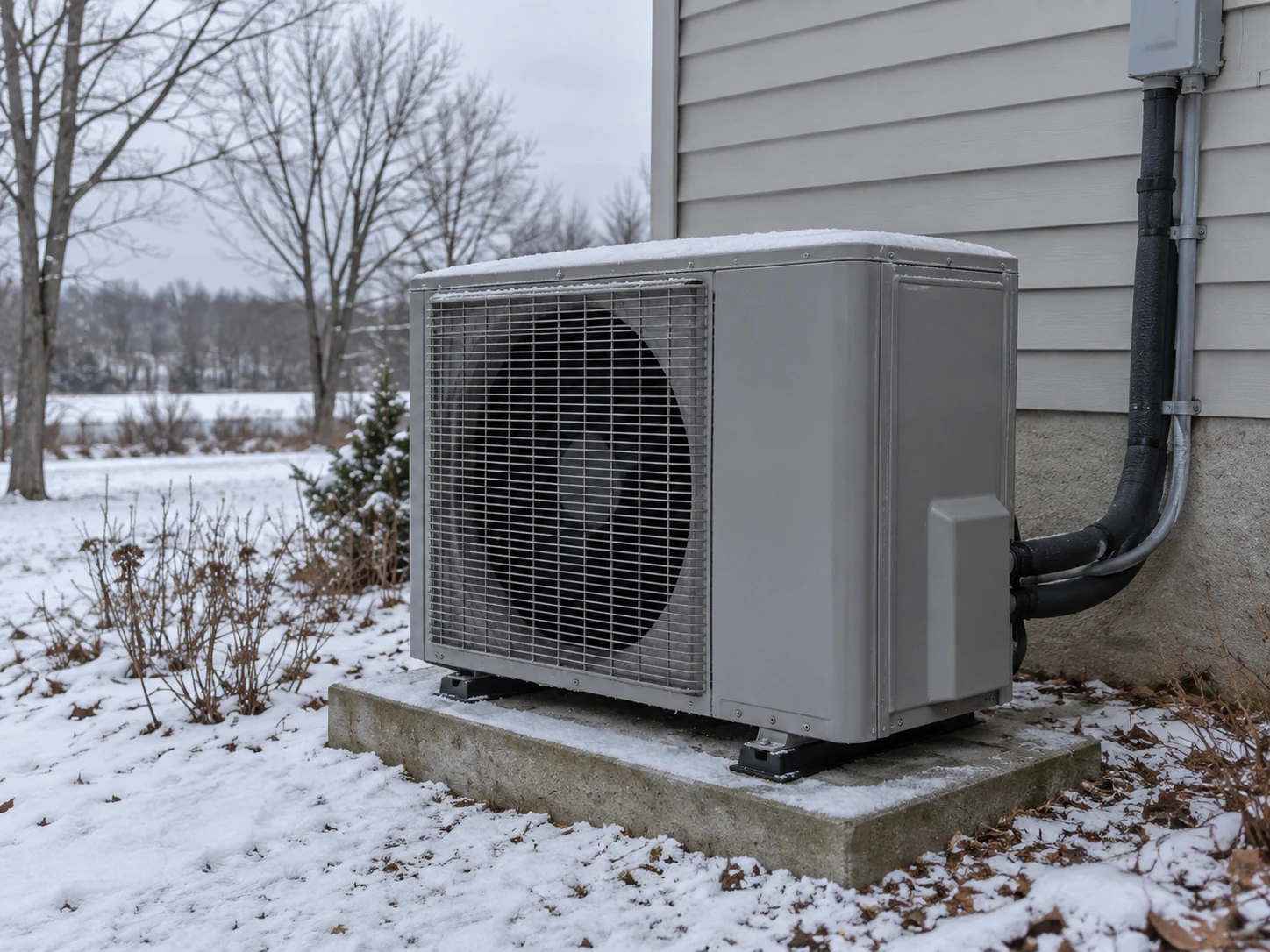
Electricity converts more simply and lands harder. A million Btu is 293 kilowatt hours, which at 17.02 cents costs $49.88. That is what electric resistance heat costs, and it is what backup heat costs. A heat pump divides that figure by its coefficient of performance, the ratio of heat moved to electricity drawn.
| How the heat is made | Cost per million Btu delivered |
|---|---|
| 95 percent gas furnace | about $11.66 |
| 80 percent gas furnace | about $13.85 |
| Heat pump at a COP of 3.5 | about $14.25 |
| Heat pump at a COP of 3 | about $16.63 |
| Heat pump at a COP of 2 | about $24.94 |
| Electric resistance backup heat | about $49.88 |
Read it the other way and you get the number to hold on to. At these prices a heat pump needs a coefficient of performance above about 4.3 to deliver heat for less than a 95 percent gas furnace, or about 3.6 to beat an 80 percent one. That is the break-even for this calculation rather than a forecast. It matters because a heat pump's coefficient of performance falls as the outside air gets colder, and ENERGY STAR's cold climate designation asks for at least 1.75 at 5 degrees, well under either break-even.
Why your summer gas bill makes gas look expensive
Because almost none of it is gas. The average price per unit looks wild in summer: EIA's Indiana figures show about $10.03 per thousand cubic feet in January 2026 and about $24.52 in June. The gas itself did not get more expensive. Summer usage collapses to cooking and hot water, so the fixed delivery and customer charges get spread across a tiny volume, and the average price per unit balloons.
It matters because it is an easy way to get this comparison badly wrong. Set a June gas bill against a June electric bill and gas looks ruinous. Comparing the same winter months is more honest, though it still will not settle it on its own, because a furnace and a heat pump turn their fuel into heat at different rates.
The annual figure used above, $11.49, is weighted by how much gas people actually burn, which is why it sits close to the winter price rather than halfway to the summer one.
The comparison that is not furnace against heat pump
On the install side the honest comparison is a furnace plus an air conditioner against a heat pump, because the heat pump does both jobs. Setting a furnace price against a heat pump price makes the heat pump look expensive for a machine that replaces two. That changes the arithmetic most when both your existing units are near the end.
National price guides give broad estimates and disagree with themselves. This Old House puts central air at $8,460 on average, in a range topping out at $10,575, then lists $10,575 again as its average for a heat pump. Its own separate heat pump guide puts that average at $8,042. Same publisher, two different numbers for the same machine, which is the measure of how much weight any of these carry. What a new air conditioner costs here and what furnace repair and replacement cost here go through the ranges.
Get both quoted by one contractor, for your house, off a heat loss calculation. That is the only comparison that is actually about your home.
When the running cost does not decide it
Three situations change the picture. If the house has no gas line, the comparison is a heat pump against electric resistance, and a heat pump delivers several units of heat per unit of electricity where resistance delivers one. If the furnace and air conditioner are both due, one machine replacing two changes the up front number. And solar changes what a kilowatt hour costs you.
There is also the option that takes both sides of the argument. A dual-fuel system pairs a heat pump with a gas furnace and switches between them on outdoor temperature. The heat pump covers mild weather, the furnace takes over in colder weather, and where the changeover is set decides how much of your heat comes from each. Worth asking what that setting would be and why.
Questions people ask
Is a heat pump cheaper to run than a gas furnace in Indiana?
Not in this calculation. Per unit of heat delivered, a 95 percent gas furnace works out at about $11.66 per million Btu against roughly $16.63 for a heat pump holding a coefficient of performance of 3, using Indiana's published average prices.
That is heating only. In summer a heat pump is your air conditioner, and running it for cooling costs what running an air conditioner of the same efficiency costs.
What is a coefficient of performance?
The ratio of heat a system moves to the electricity it draws. A coefficient of performance of 3 means three units of heat delivered for one unit of electricity bought. Electric resistance heat sits at 1.
It falls as the outside air gets colder, because there is less heat out there to move. That is why a single figure from a brochure is not what the machine does in February.
Does the gas advantage hold if electricity prices keep rising?
It depends which price moves. Indiana electricity has been rising, and the figures here are a snapshot rather than a forecast. The break-even is the thing to watch: at present a heat pump needs a coefficient of performance over about 4.3 to match a 95 percent furnace.
If electricity fell or gas rose enough to pull that break-even down near 3, the answer would change. Neither has happened yet.
How do I work this out with my own bills?
Use the rates on your own bills, looking at the charges that vary with usage rather than the fixed ones. If your gas is priced per thousand cubic feet, divide that price by 1.037, then divide by your furnace efficiency as a decimal.
If your bill is in therms, divide by 0.1 instead, since a therm is a hundred thousand Btu. For electricity, multiply the price per kilowatt hour by 293 and divide by the coefficient of performance you expect. Both give you a cost per million Btu delivered.
Does this mean a heat pump is the wrong choice here?
No. It means the case for one here is not a lower heating bill at these prices. Different rates, a different heat pump or a different system being replaced can all change that. The rest of the case stands: one machine doing two jobs, no combustion in the house, cooling included.
If someone sells you a heat pump on the promise of cheaper heat than gas, ask to see the arithmetic at your rates. If they sell it on replacing two machines with one, that one holds up.
Sources
- US Energy Information Administration, average price of electricity to ultimate customers by end-use sector, by state
- US Energy Information Administration, Indiana price of natural gas delivered to residential consumers, annual
- US Energy Information Administration, Indiana price of natural gas delivered to residential consumers, monthly
- ENERGY STAR, air source heat pumps key product criteria
- National cost guides published by three home services directories, checked October 2026
Last updated